
Engineering Nisin: How Bio-designed Antimicrobial Peptides Are Rewriting the Rules Against Superbugs
What makes engineered nisin more effective than natural nisin?
Here's something that might surprise you: one of our most promising weapons against hospital superbugs like MRSA (Methicillin-resistant Staphylococcus aureus) actually comes from the same bacteria that help make cheese. Nisin is a natural antimicrobial peptide that has quietly been keeping our food safe for decades. Our group was the first to bioengineer nisin into something even more powerful and later engineer it to sidestep bacterial resistance mechanisms. Some bacteria make an enzyme that simply chops up nisin, rendering it useless. We tackled this by tweaking nisin’s design so it could resist being cut by such enzymes. In essence, we taught nisin how to survive the bacterial counterattack.
As a scientist, I often marvel at how a simple four-letter DNA code can yield an almost endless variety of these killer peptides. Even tiny changes in that code, sometimes just a single letter can modify the properties of a peptide, altering its charge, structure, or how it interacts with bacterial cells. In molecules like nisin, this complexity goes even further. After the peptide is made, it is chemically modified to form unique ring structures, locking it into a shape that makes it incredibly effective at targeting bacteria.
Even more exciting, we are no longer just observing this process; we can now actively shape it. Using modern molecular biology tools, we can redesign these peptides at the DNA level, using cutting-edge techniques to make small, precise changes to improve how they behave. This means we can create new variants that are more stable, more effective, and better equipped to tackle hard-to-kill, drug-resistant pathogens.
Science can take a simple idea like, “Can we make this natural antibiotic better?” and turn it into a tangible reality that improves people’s lives. Every experiment is an adventure into the unknown, and every discovery, no matter how small, feels like magic because it reveals something brand new about our world.
I still remember the moment we tested our first engineered nisin variant and watched a normally resistant bacterium just give up. Something invisible to the naked eye, a tiny tweak at the molecular level, had gained the power to defeat a pathogen that antibiotics couldn't touch. That's the moment science stops being work and starts feeling like magic. What I love most about this work is that it started with the simplest question: “Can we make this natural antibiotic better?” No supercomputer, no billion-dollar budget, just curiosity and a willingness to try despite the mind-boggling number of different nisin variants that could be potentially made (1924!). That is what science is at its core. Anyone with a question and the drive to chase it can be part of this, and sometimes, chasing that question leads you from a jar of fermented milk to a potential answer to one of medicine's biggest crises. I encourage future scientists to embrace that curiosity and not be afraid of the unknown and seemingly impossible challenges because science gives you the tools to turn questions into breakthroughs.
In the next decade, I think we will see the use of tailored microbial solutions for health, potentially by using designer probiotics to produce molecules like nisin in our bodies, to selectively control infections or balance our microbiome. For example, a probiotic could be engineered to release a nisin derivative in the gut to knock out a pathogen causing intestinal disease, all while leaving beneficial bacteria alone. This precise sculpting of the human microbiota for disease treatment using nature’s own tools and refined by bioengineering could revolutionize how we treat not just infections, but also chronic conditions linked to bad bacteria. I also predict we’ll discover even more lanthipeptides (the family to which nisin belongs) already present within human microbiomes and improve them in the lab for therapeutic use.
The next decade will bring challenges — it always does. But if a bacterium from fermented milk could teach us how to fight superbugs, I'd say we're just getting started. I’m confident that the innovative spirit of science and the worldwide community of dedicated researchers will lead to breakthroughs that we can barely imagine now. It’s an incredibly bright future, and I’m excited to be a part of it.
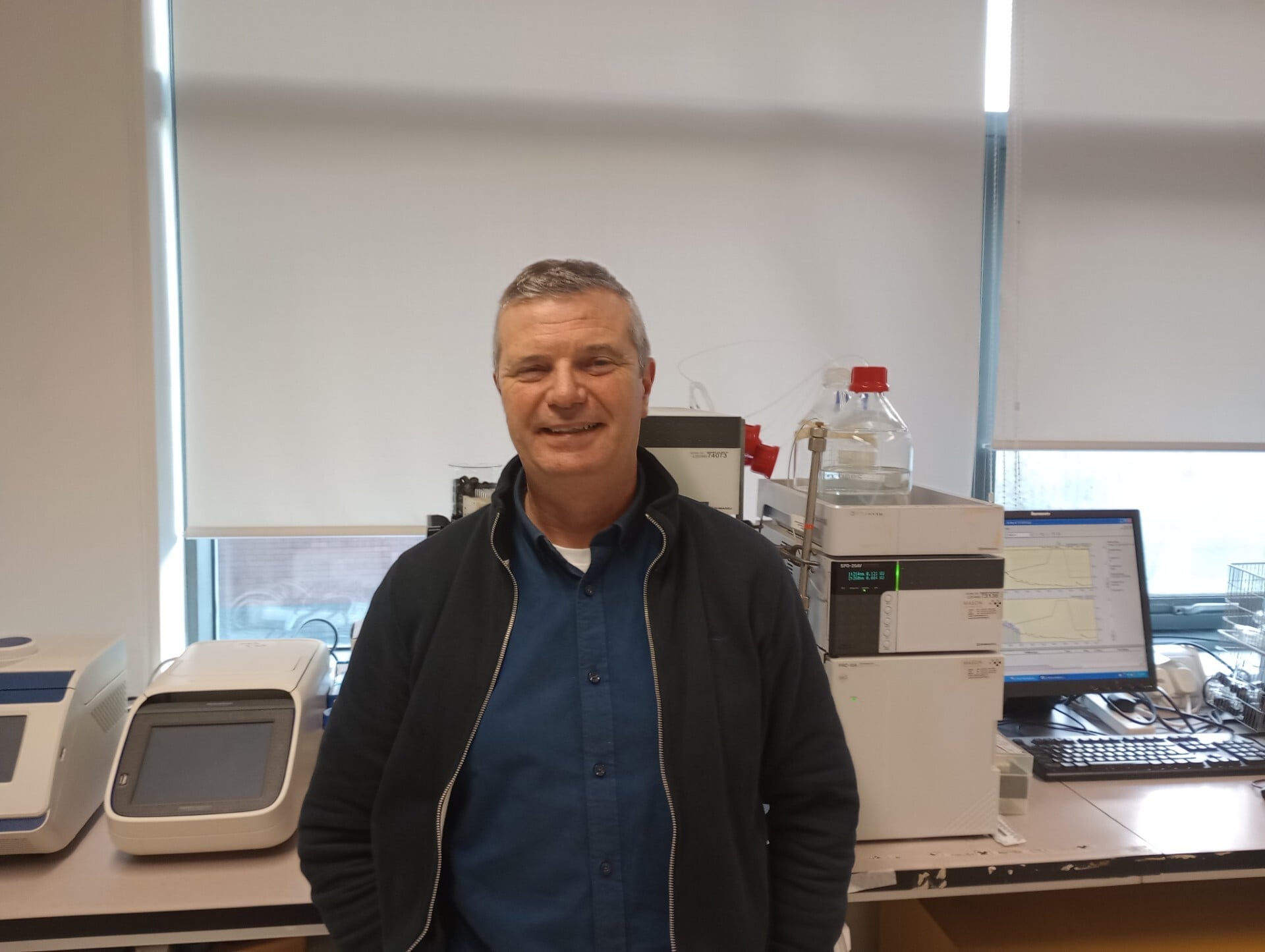
Dr. Des Field is a Senior Scientist within APC Microbiome Ireland (https://www.ucc.ie/en/apc/) and the School of Microbiology https://www.ucc.ie/en/microbiology) at University College Cork, Ireland. Dr. Field has made significant contributions in understanding and advancing the application of the widely used food preservative nisin and other bacteriocins (antimicrobial agents produced by bacteria that kill other bacteria) in food systems, particularly from a translational and food-relevant perspective. Dr. Field’s work focuses on linking bacteriocin structure, production, and activity to real food matrices, moving beyond in vitro assays to address how nisin performs under conditions relevant to food processing and storage. He has been especially successful in the bioengineering of nisin variants with enhanced functionality (Loop | Des Field (frontiersin.org). His work on hinge-region variants (including M21 substitutions) provides evidence that rational engineering can tailor nisin activity without compromising safety or food applicability.
Beyond food preservation, Dr Field is also exploring nisin as a biotherapeutic or microbiome-modulating agent. His work has examined the activity of nisin against clinically relevant pathogens, including MRSA, VRE, Listeria monocytogenes and other Gram-positive bacteria, and has highlighted its potential as a narrow-spectrum antimicrobial with reduced collateral impact compared to conventional antibiotics. His more recent work has focused on the mining of publicly available data sets to identify novel variants and to determine the presence and significance of nisin biosynthetic gene clusters across the biosphere as well as developing strategies to circumvent nisin immunity and resistance mechanisms.
Daily Insight
Recent Posts
Recent Post Tags
- next generation sequencing
- gene synthesis
- rna sequencing
- proteomics
- sanger sequencing
- transcriptomics
- antibody discovery
- olink
- Event
- GENEWIZ Update
- aav-itr
- cell and gene therapy
- itr sequencing
- aav plasmid prep
- antibody engineering
- genomics
- grant winner
- mRNA
- quantitative pcr (qPCR)
- rna therapeutics
- single-cell sequencing
- whole plasmid sequencing
- NULISA
- PacBio
- aav
- bioengineering
- bispecific antibodies
- digital pcr (dPCR)
- direct colony sequencing
- immunity
- lentivirus
- long-read sequencing
- oxford nanopore sequencing (ont)
- pcr + sanger sequencing
- peptides
- whole genome sequencing