
Bispecific Antibodies: Design Strategies, Challenges, and What It Takes to Get Them Right
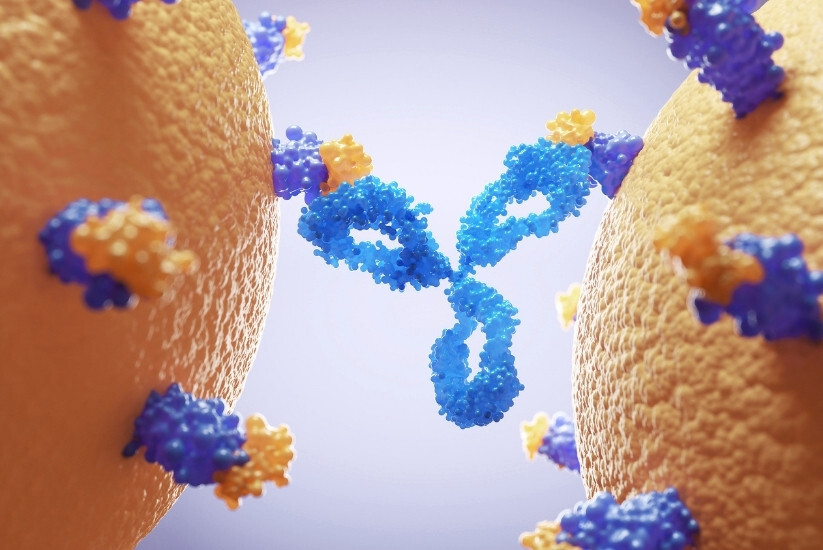
Bispecific antibodies are engineered proteins designed to bind two distinct antigens or epitopes simultaneously, allowing a single molecule to coordinate multiple biological interactions at once. Unlike conventional monoclonal antibodies, which target a single antigen, bispecific antibodies can bridge immune cells and tumor cells, block two disease-related signaling pathways at the same time, or fine-tune receptor activity, making them a powerful tool in oncology, immunology, and beyond.
Antibody engineering has evolved far beyond the traditional IgG format. Advances in discovery technologies and protein design have enabled the development of increasingly sophisticated antibody architectures, each tailored to address specific biological challenges.
Among these, bispecific antibodies represent one of the most significant innovations in modern biologics. By enabling a single molecule to engage two targets simultaneously, bispecific antibodies expand the functional capabilities of antibody therapeutics and open new possibilities for disease treatment.
Why Bispecific Antibodies Matter in Cancer and Immune Disorder Treatments
Many diseases, particularly cancer and immune disorders, are driven by complex and interconnected biological pathways. Targeting a single antigen is often insufficient to fully modulate disease progression, as compensatory mechanisms or redundant signalling networks can limit therapeutic effectiveness.
Bispecific antibodies address this limitation by combining two targeting functions into one molecule. Rather than administering multiple therapies, researchers can design a single construct capable of coordinating multiple biological interactions. This approach has the potential to improve efficacy, reduce dosing complexity, and enable entirely new mechanisms of action.
What Are Bispecific Antibodies and How Do They Work?
At their core, bispecific antibodies are engineered proteins that can bind to two distinct antigens or epitopes simultaneously. These targets may be located on different cells or on the same cell, depending on the intended function.
This dual specificity allows bispecific antibodies to bring two molecules or cells into close proximity, block multiple signaling pathways at once, and fine-tune receptor activation or inhibition. Importantly, bispecific antibodies are not merely combinations of two monoclonal antibodies. Their development requires the precise integration of structural and functional components to maintain stability, ensure proper assembly, and achieve balanced binding activity. The versatility of bispecific antibodies stems from their capacity to simultaneously engage two targets in coordinated ways through several key mechanisms.
Receptor Modulation: Bispecific constructs can also regulate receptor activity more precisely by binding multiple epitopes or receptors, enabling enhanced specificity or conditional activation.
Dual Pathway Blockade: Dual-pathway blockade uses bispecific antibodies to simultaneously inhibit two signalling pathways involved in disease progression, reducing compensatory mechanisms and improving therapeutic responses. By suppressing interconnected pathways, these therapies help overcome treatment resistance and provide more effective control of tumor growth than single-target approaches.
Cell Bridging: One of the most widely used strategies involves bringing immune cells into direct contact with target cells. For example, bispecific T-cell engagers bind both a tumor-associated antigen and a T-cell receptor component, facilitating targeted immune activation.
By combining these mechanisms within a single molecule, bispecific antibodies offer a level of functional flexibility not achievable with conventional formats.
Types of Bispecific Antibody Formats
Bispecific antibodies can be broadly categorized into two classes: IgG-like formats and fragment-based formats.
IgG-like bispecifics retain an Fc region, providing extended half-life and familiar pharmacokinetics. These formats often resemble conventional antibodies but incorporate engineered features to enable dual specificity.
In contrast, fragment-based bispecifics are typically composed of smaller units such as scFvs or Fab fragments. These constructs are more compact and can be highly flexible but often exhibit shorter half-lives and may require additional modifications for therapeutic use.
Each format presents trade-offs between stability, functionality, manufacturability, and clinical performance. Choosing the appropriate format depends on the intended mechanism of action and therapeutic context.
Why Bispecific Antibodies Are More Challenging to Develop?
While the concept of dual targeting is straightforward, the underlying molecular design is considerably more complex.
One of the central challenges is chain mispairing. In IgG-like bispecifics, multiple heavy and light chains must assemble correctly to form a functional molecule. Incorrect pairing can lead to heterogeneous products, reduced yields, and compromised activity.
Additional challenges include structural asymmetry compared with standard IgG molecules, increased risk of aggregation and instability, lower expression levels in some systems, and greater product heterogeneity. These factors make bispecific antibody development significantly more demanding than traditional monoclonal antibody workflows.
Bispecific Antibody Expression, Manufacturing, and Analytical Considerations
Bispecific antibodies introduce additional challenges throughout both upstream and downstream development. Achieving the correct assembly and balanced expression of multiple antibody chains is critical for generating functional molecules with consistent quality.
Successful expression often requires careful optimization of expression vector design, heavy and light chain ratios, host cell systems, and culture conditions. Even with these strategies in place, bispecific antibodies frequently exhibit lower expression yields compared with conventional monoclonal IgG antibodies, which can affect development timelines, manufacturing efficiency, and scalability. As a result, many development programs assess multiple construct variants in parallel to identify candidates with improved expression, stability, and manufacturability profiles.
The structural complexity of bispecific antibodies also creates significant challenges during purification and analytical characterization. In contrast to the relatively homogeneous nature of monoclonal antibodies, bispecific formats can produce a mixture of correctly assembled molecules, mispaired species, and incomplete structures. Efficient separation of these variants often requires more advanced purification strategies and process optimization.
Analytical characterization is similarly more demanding, as confirming molecular identity, purity, structural integrity, and functional activity typically rely on multiple complementary analytical techniques. These considerations underscore the importance of implementing robust quality control measures and early sequence verification to identify potential issues before they impact later stages of development and manufacturing.
Looking Ahead: The Future of Bispecifics
Bispecific antibodies are already transforming therapeutic strategies, particularly in oncology. However, their potential extends well beyond current applications. Emerging areas of research include:
- Multispecific antibodies targeting three or more antigens
- Conditionally active constructs with improved safety profiles
- Applications in autoimmune and infectious diseases
As these innovations continue to evolve, the importance of thoughtful design, robust validation, and scalable manufacturing will only increase.
Explore bispecific antibody design strategies in more depth, download our free antibody engineering and design eBook.
About the authors: Prassanna Rao and Fränze Vorreiter are Synthesis Experts at GENEWIZ. They and their team translate complex biological challenges into precise, actionable solutions for researchers worldwide. Their expertise spans designing complex cloning strategies for de novo synthesis, synthetic libraries, recombinant antibody production, and viral production services.
Daily Insight
Recent Posts
Recent Post Tags
- next generation sequencing
- gene synthesis
- rna sequencing
- proteomics
- sanger sequencing
- transcriptomics
- antibody discovery
- olink
- Event
- GENEWIZ Update
- aav-itr
- cell and gene therapy
- itr sequencing
- aav plasmid prep
- antibody engineering
- genomics
- grant winner
- mRNA
- quantitative pcr (qPCR)
- rna therapeutics
- single-cell sequencing
- whole plasmid sequencing
- NULISA
- PacBio
- aav
- bioengineering
- bispecific antibodies
- digital pcr (dPCR)
- direct colony sequencing
- immunity
- lentivirus
- long-read sequencing
- oxford nanopore sequencing (ont)
- pcr + sanger sequencing
- peptides
- whole genome sequencing